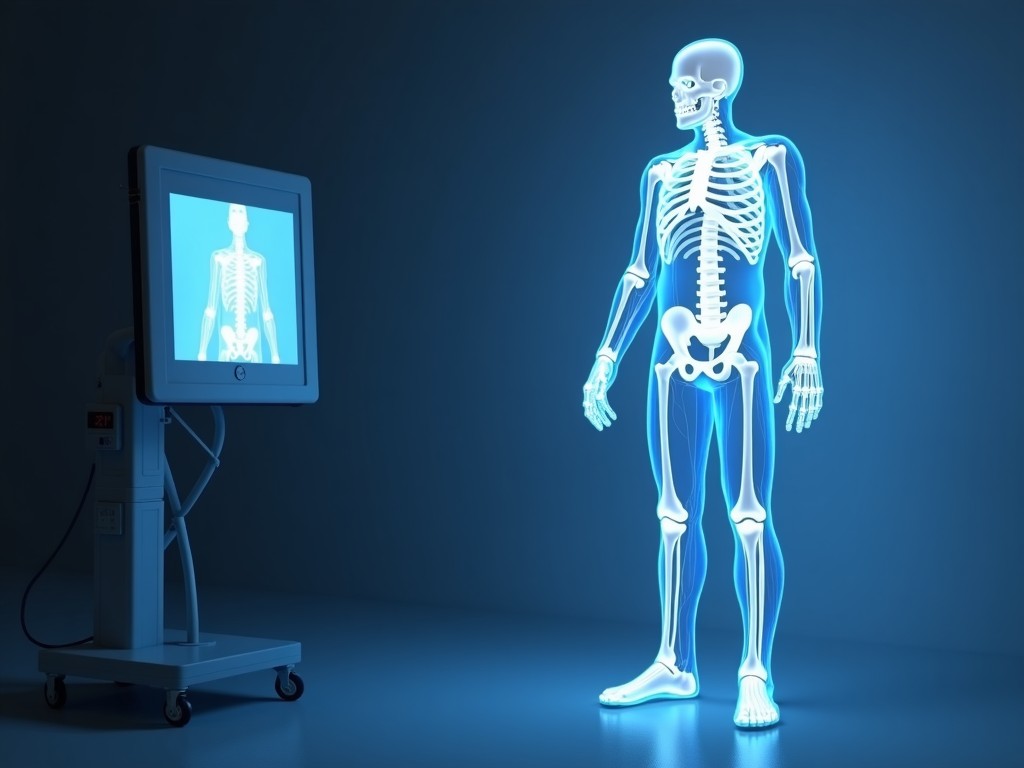
China 3D Body Scanner Machine Factory
A 3D body scanner captures the three‑dimensional geometry of a human subject using structured light or laser triangulation, producing a dense point cloud that can be converted into a measurable mesh.
Inquire NowChina-Based Manufacturer of 3D Body Scanning Machines
A 3D body scanner captures the three‑dimensional geometry of a human subject using structured light or laser triangulation, producing a dense point cloud that can be converted into a measurable mesh. The data supports ergonomic analysis, apparel pattern generation, virtual fitting, and medical assessment, offering repeatable measurements that eliminate the variability of manual tape methods.
Key Technical Parameters
| Parameter | Typical Value | Notes |
|---|---|---|
| Scanning Volume (W×H×D) | 500 mm × 500 mm × 800 mm | Customizable up to 1000 mm depth on request |
| Point Spacing | 0.5 mm | Determines surface detail resolution |
| Measurement Accuracy | ±2 mm (σ) | Validated against calibrated gauge blocks |
| Frame Rate | 12 frames / second | Enables capture of subtle pose changes |
| Light Source | Blue‑LED structured light, Class 2 | Eye‑safe, low power consumption |
| Output Formats | PLY, OBJ, STL, CSV | Compatible with CAD, CG, and analytics software |
| Power Supply | 100‑240 V AC, 50/60 Hz, 150 W max | Universal input for global deployment |
Industrial Applications
In apparel manufacturing, the scanner provides a digital twin of the customer’s torso, enabling pattern makers to adjust ease allowances based on actual body shape rather than static size charts. This reduces sample iterations and material waste.
Automotive seating suppliers use the data to evaluate occupant posture and pressure distribution, informing foam geometry and lumbar support design before physical prototyping.
Virtual reality and gaming studios integrate the mesh into avatar creation pipelines, ensuring accurate scale and proportion for immersive experiences.
Healthcare providers employ the scanner for tracking morphological changes in rehabilitation or orthotic fitting, delivering quantitative progress reports.
Customization and Integration
- Adjustable scanning envelope – width, height, depth can be increased or reduced to match fixture constraints.
- Optional turntable or robotic arm interface for automated pose sequencing.
- Choice of illumination wavelength (blue LED or infrared) to suit reflective or dark‑colored clothing.
- Software development kit (SDK) available in C++, Python, and LabVIEW for custom post‑processing.
- Enclosure ratings up to IP54 for dust‑protected workshop environments.
Manufacturing and Quality Assurance
Each scanner undergoes a two‑stage verification: first, optical alignment is checked using a calibrated reference plate to confirm point‑cloud uniformity across the field of view; second, a traceable artifact with known dimensions is scanned repeatedly to assess repeatability and bias.
Critical components such as the projector lens and CMOS sensor are sourced from suppliers with ISO‑9001 certification, and incoming parts are inspected for surface roughness and focal length tolerance before assembly.
Final units are packaged with shock‑absorbent foam and a humidity‑indicator card, then placed in double‑wall corrugated cartons rated for ISTA‑3A transit testing.
Frequently Asked Questions
Can the scanning volume be customized? Yes, the envelope can be adjusted according to the part size or facility layout; consult our engineering team with your dimensional requirements.
What information is needed before quotation? Provide the desired measurement accuracy, scanning speed, environmental conditions (e.g., ambient light, temperature), and any required software interfaces.
Which materials are used for the scanner housing? The main frame is extruded aluminum (6063‑T5) with powder‑coat finish; cover panels are ABS‑PC blend for impact resistance.
How is quality inspected? Each unit is tested against a NIST‑traceable gauge block set and a calibrated human phantom; results are documented in a test report shipped with the machine.
What packaging options are available? Standard export carton, wooden crate for high‑vibration routes, or custom foam inserts for delicate optical modules.
How are export shipments protected? Packages include inner polyethylene barrier, desiccant packs, and corner protectors; all comply with ISPM‑15 wood‑treatment standards.
What is the typical production lead time? Standard configurations ship within 4‑6 weeks after receipt of purchase order; customized builds are quoted per project.
Can a sample be evaluated? Yes, we can arrange a demo unit at your site or a virtual live scan session; contact us to schedule.
Request a Quote or Technical Consultation
Our engineering staff is ready to review your application specifics, suggest optimal scanner configuration, and provide a detailed proposal. To begin the conversation, please use the link below.