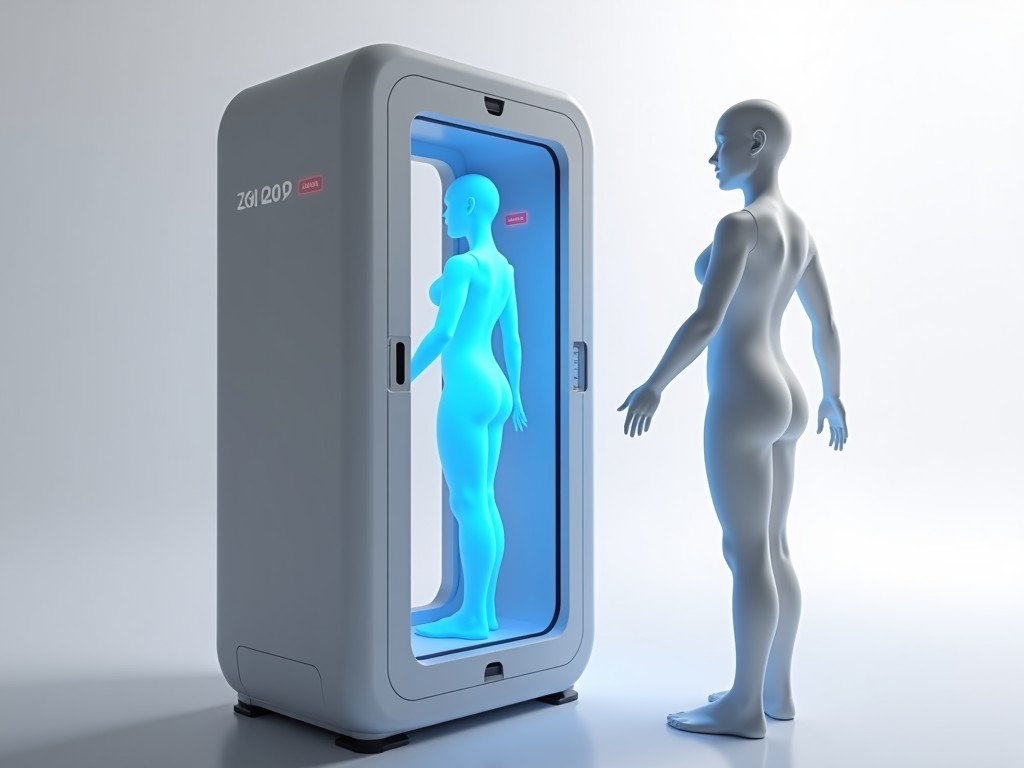
China 3D Body Fat Scanner Price
A 3D body fat scanner combines volumetric imaging with bioelectrical impedance to estimate body composition. This section outlines the technology, typical specifications, and price considerations for
Inquire NowChina 3D Body Fat Scanner Price Overview
A 3D body fat scanner combines volumetric imaging with bioelectrical impedance to estimate body composition. This section outlines the technology, typical specifications, and price considerations for units sourced from China.
Technology and Measurement Principle
The device projects a structured light pattern onto the subject while capturing multiple views to reconstruct a surface mesh. Simultaneously, it sends low‑amplitude electrical currents through segmental electrodes to measure impedance. The combined data are processed to derive fat mass, lean mass, and segmental distribution.
Key Technical Specifications
Typical performance characteristics are shown below; actual values can be adjusted according to project requirements.
| Parameter | Typical Value / Option |
|---|---|
| Measurement Method | Structured light 3D scanning + multi‑frequency bioelectrical impedance |
| Scan Volume | 0.8 m × 0.8 m × 2.0 m (customizable) |
| Surface Resolution | 0.5 mm point spacing |
| Impedance Repeatability | ±1.5 % (segmental) |
| Scan Time | ≤6 seconds per full body |
| Power Consumption | 30 W (average) |
| Data Interface | USB 3.0, Ethernet (optional Wi‑Fi) |
| Operating Temperature | 10 °C – 35 °C |
| Enclosure Material | ABS plastic (optional stainless‑steel frame) |
| Overall Dimensions | 0.9 m × 0.9 m × 2.2 m |
| Weight | 45 kg |
Applications in Industrial and Commercial Settings
In fitness centers, the scanner provides quick, non‑invasive assessments that support personalized training programs. Medical clinics use it for monitoring patients undergoing weight‑management or rehabilitation regimens. Research laboratories benefit from the high‑resolution surface data for studies on body shape changes. Corporate wellness programs deploy the units to offer employees periodic health screenings with minimal disruption. Each setting values the combination of optical detail and electrical impedance for a more complete picture than weight‑only scales.
Factors Influencing Price
Several design choices affect the final cost of a 3D body fat scanner.
- Number of depth sensors and projector resolution
- Processing unit performance (CPU/GPU) and memory
- Enclosure material (ABS vs. stainless‑steel) and finish
- Calibration accessories and software licensing level
- After‑sales support, warranty length, and on‑site training
Typical Price Range
Price varies mainly with the number of depth sensors, the processing unit’s capability, and the enclosure material. A base configuration with a single sensor suite and ABS housing typically falls between $8,000 and $12,000 USD. High‑end models that add multi‑sensor arrays, stainless‑steel frames, and advanced analytics software can reach $20,000 to $25,000 USD.
Customization Options
Buyers can request alternative scan volumes, customized software interfaces, or integration with existing health‑management platforms. Enclosure colors, mounting options, and language packs are also adjustable upon request.
Quality Control and Calibration
Each unit undergoes optical alignment verification using a calibrated reference target before shipment. Impedance measurement circuits are tested against known resistive loads to ensure repeatability within ±1.5 %. Final functional checks include a full‑body scan of a volunteer with known body‑fat percentage obtained via dual‑energy X‑ray absorptiometry.
FAQ
Can the scan volume be customized?
Yes, the scanning area can be adjusted to accommodate different user heights or facility constraints, subject to mechanical design limits.
What information is needed for a quotation?
Required details include desired scan volume, sensor count, enclosure material, software features, and any integration or training requirements.
How is the device calibrated in the field?
Field calibration uses a supplied reference plate for optical alignment and a precision resistor set for impedance verification; procedures are documented in the user manual.
What warranty and support options are available?
Standard warranty covers 12 months of parts and labor; extended service plans and on‑site technical assistance can be arranged.
What are the typical lead times for production?
Lead times range from 4 to 6 weeks for standard configurations; customized orders may require 8 to 10 weeks depending on component availability.