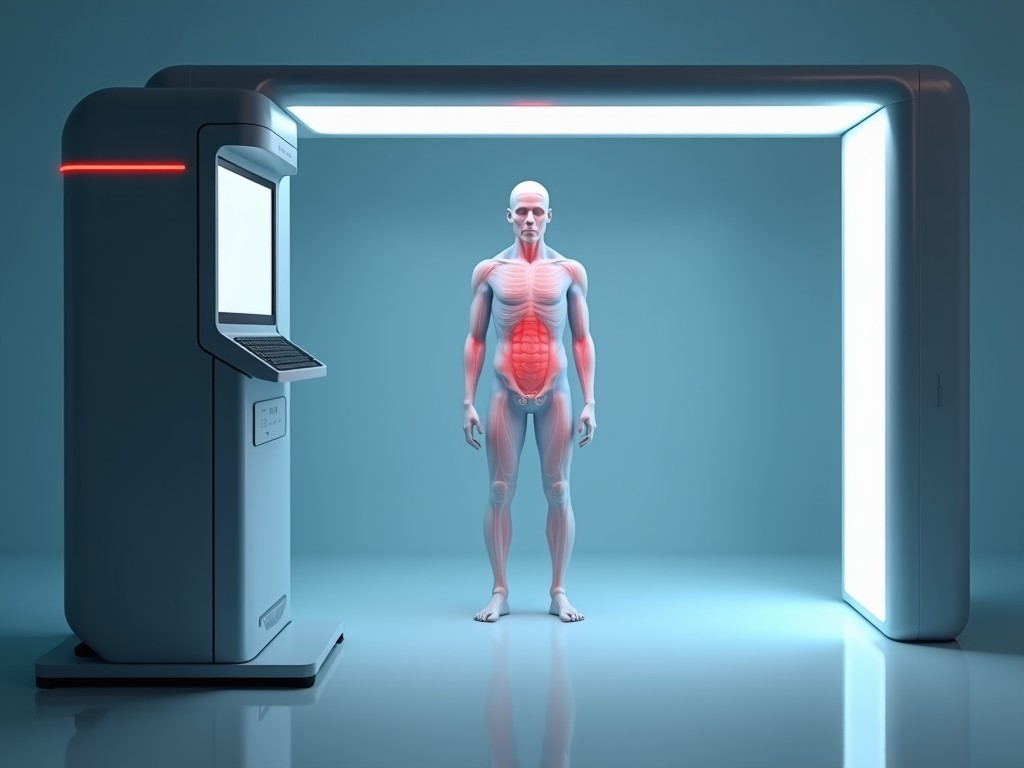
Budget Friendly What Is A 3D Body Scan
A 3D body scan captures the external shape of a human body as a point cloud or mesh, enabling precise dimensional analysis for applications such as ergonomic design, apparel fitting, and health
Inquire NowBudget-Friendly 3D Body Scanners: Overview and Selection Guide
A 3D body scan captures the external shape of a human body as a point cloud or mesh, enabling precise dimensional analysis for applications such as ergonomic design, apparel fitting, and health monitoring. The process typically involves projecting a known pattern onto the subject and recording its deformation with one or more sensors to calculate depth. Understanding the underlying measurement principles helps buyers evaluate whether a lower‑cost system meets their accuracy and throughput requirements.
How 3D Body Scanning Works
Most budget‑friendly scanners use structured light or laser triangulation. In structured light, a fringe pattern is projected and captured by a camera; the phase shift of the pattern yields depth with typical lateral resolution of 0.5 mm to 2 mm depending on baseline and pixel count. Laser triangulation systems sweep a laser line and detect its position with a CMOS sensor, offering accuracy in the range of 0.2 mm to 1 mm at working distances of 0.5 m to 2 m. Scan time per frame usually falls between 0.1 s and 0.5 s, allowing either static poses or slow motion capture.
Cost Drivers in Budget‑Friendly Systems
Lower price points are achieved by reducing the number of cameras, using lower‑resolution sensors, and limiting the usable scan volume. For example, a single‑camera structured light setup may provide a scan volume of 0.4 m × 0.4 m × 0.6 m, whereas a multi‑camera rig can exceed 1 m in each dimension. Calibration often relies on a reference board rather than a laser tracker, which can increase measurement uncertainty but keeps component costs down. Power consumption typically stays under 15 W, allowing operation from a standard USB‑C or laptop power supply.
Typical Technical Specifications
| Parameter | Typical Value (Budget Friendly) | Notes |
|---|---|---|
| Scan Accuracy | 0.5 mm – 2 mm | Dependent on baseline and pattern frequency |
| Lateral Resolution | 0.5 mm – 2 mm | Pixel size and projection optics |
| Scan Volume (W×H×D) | 0.4 m × 0.4 m × 0.6 m | Single‑camera configuration |
| Frame Rate | 2 fps – 10 fps | Limited by USB 2.0/3.0 bandwidth |
| Light Source | LED or low‑power laser diode | Class 1 eye‑safe |
| Data Output | PLY, OBJ, STL, or raw point cloud | Via USB or Ethernet |
| Power Consumption | 5 W – 15 W | Bus‑powered options available |
| Weight | 0.5 kg – 2 kg | Includes housing and mounting brackets |
Industrial Applications
In apparel manufacturing, a 3D body scan provides repeatable measurements for pattern making, reducing the need for physical fittings and cutting material waste. Ergonomics teams use the data to design workstations that accommodate the 5th to 95th percentile of user dimensions, improving comfort and lowering injury risk. Fitness centers employ scanners to track body composition changes over time, offering objective feedback that complements traditional weight‑scale methods. Because budget‑friendly units are portable and quick to set up, they can be shared across multiple departments without major infrastructure investment.
Quality Assurance and Calibration
Reliable scanning starts with a traceable calibration artifact, such as a checkerboard or a calibrated sphere set, whose geometry is known to within a few microns. The scanner software computes intrinsic and extrinsic parameters by minimizing reprojection error across multiple poses. Regular verification—typically weekly in a production environment—ensures that drift remains below the specified accuracy budget. Documentation of calibration dates, operator name, and environmental conditions supports audit trails for ISO‑9001 or similar quality systems.
Customization and Integration Options
Many budget scanners expose a software development kit (SDK) that allows users to trigger captures, retrieve depth maps, and apply custom filters for noise reduction or hole filling. Mounting options include tripod adapters, VESA brackets, or articulated arms, enabling fixed‑installation on production lines or handheld use for field surveys. Licensing models vary; some vendors provide perpetual SDK licenses, while others require annual renewal for access to advanced post‑processing algorithms such as automatic segmentation or mesh smoothing.
Frequently Asked Questions
-
Can the scan volume be increased without replacing the unit?
Some systems support adding external cameras or mirrors to extend the field of view, but accuracy may degrade due to baseline changes; validation with a reference part is recommended. -
What file formats are available for downstream CAD or ERP systems?
Most scanners export standard mesh formats (OBJ, STL, PLY) and raw point clouds (XYZ, CSV); conversion to STEP or IGES typically requires third‑party software. -
How is data privacy handled when scanning individuals?
The hardware itself does not store personal identifiers; data handling policies are determined by the customer’s IT governance and should align with GDPR or local regulations. -
What is the typical lead time for a quote and delivery?
Quotations are usually provided within two business days after receiving application details; standard units ship in 3‑4 weeks, while customized mounts may extend to 6‑8 weeks.
Next Steps
To discuss how a budget‑friendly 3D body scanner can be integrated into your specific workflow, please provide details on the required scan volume, target accuracy, and any software integration needs. Our technical team will review the information and respond with a preliminary configuration and pricing estimate.
Request a Technical Consultation