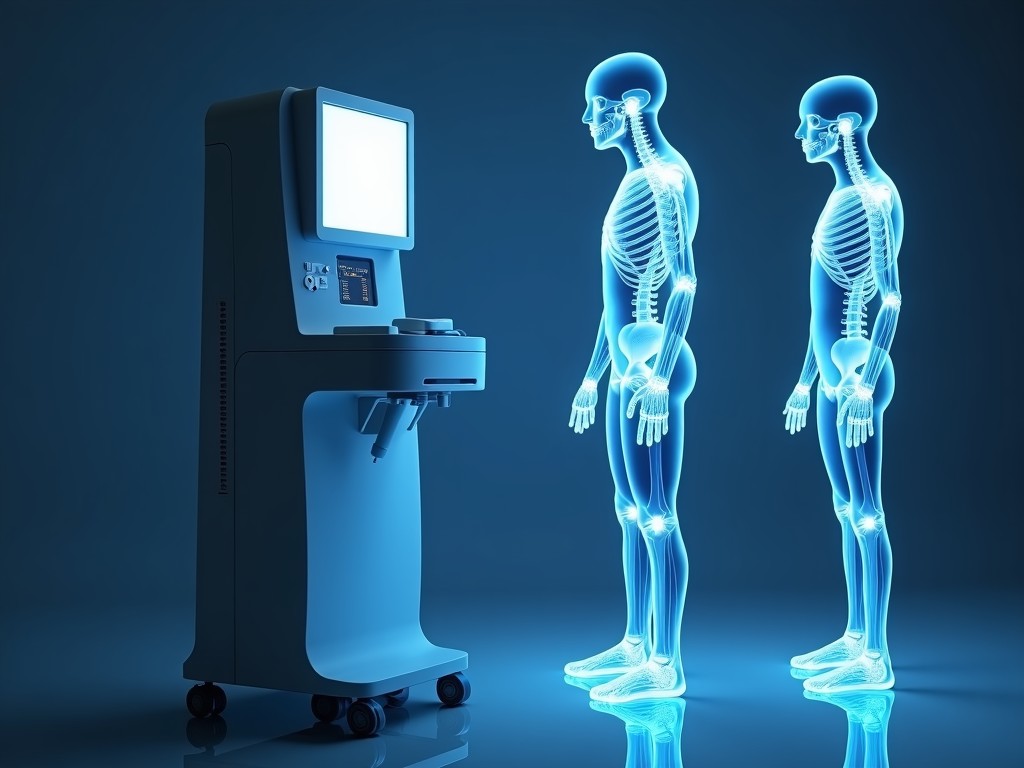
B2B Whole Body Scan Machine Supplier
The system integrates a rotating gantry with a multi‑slice detector array to acquire volumetric data of the entire subject in a single pass. Scan times are governed by table feed rate and rotation
Inquire NowWhole Body Scan Machine for Industrial and Medical Applications
The system integrates a rotating gantry with a multi‑slice detector array to acquire volumetric data of the entire subject in a single pass. Scan times are governed by table feed rate and rotation speed, allowing a complete head‑to‑foothold acquisition in under 10 seconds for typical adult protocols.
Core Technology
Modern designs employ a solid‑state scintillator coupled to silicon photodiodes, delivering detective quantum efficiency above 65% at typical clinical energies. The reconstruction pipeline uses iterative algorithms with model‑based noise suppression, reducing radiation dose while preserving low‑contrast detectability.
Key Technical Specifications
| Parameter | Typical Value | Notes |
|---|---|---|
| Detector Rows | 64–128 | Configurable per project |
| Gantry Rotation Speed | 0.28–0.5 s/rev | Affects temporal resolution |
| Spatial Resolution (MTF 50%) | 0.4 mm | Measured at isocenter |
| Slice Thickness | 0.5–1.0 mm | Reconstructable increments |
| Maximum Patient Weight | 250 kg | Table load limit |
| Power Consumption | 18–22 kVA | Peak during scan |
Applications and Use Cases
In medical imaging departments the scanner supports trauma surveys, oncologic staging, and cardiovascular angiography where rapid whole‑body coverage is critical. Industrial users employ the same platform for nondestructive testing of large composite structures, where uniform penetration and high‑resolution cross‑sectional imaging reveal internal defects without disassembly.
- Emergency department rapid assessment of polytrauma patients
- Whole‑body oncologic follow‑up with lesion tracking software
- Cardiac calcium scoring and coronary artery analysis
- Inspection of aerospace fuselage sections for delamination or corrosion
- Screening of cargo containers for concealed threats using low‑dose protocols
Customization Options
Depending on project requirements the supplier can adjust detector configuration, table length, and software licensing. Optional accessories include laser‑guided patient positioning systems, dose‑monitoring interfaces compatible with hospital information systems, and specialized reconstruction kernels for metal artifact reduction.
Quality Assurance and Testing
All units undergo factory acceptance testing that measures noise power spectrum, uniformity, and geometric accuracy against IEC 60601‑2‑44 standards. Each machine receives a calibrated phantom set for ongoing performance verification, and software updates are delivered through a secure, version‑controlled pipeline to maintain regulatory compliance.
Frequently Asked Questions
Can dimensions be customized? Yes, table length and gantry bore diameter can be adjusted to accommodate specific patient populations or industrial part sizes; detailed drawings are provided upon request.
What information is required before quotation? The supplier needs the intended primary application, expected patient throughput, site power availability, and any regulatory constraints (e.g., FDA, CE) to generate a accurate scope and price.
How is quality inspected? Each scanner undergoes a standardized acceptance protocol that includes spatial resolution measurement, low‑contrast detectability test, and dose accuracy verification using traceable ion chambers.
What packaging methods are available? Units are shipped in shock‑absorbent crates with internal bracing, climate‑controlled packaging for electronic modules, and optional on‑site installation supervision.
What is the typical production lead time? Standard configurations ship within 12–16 weeks after order confirmation; custom variants may extend to 20 weeks depending on subsystem availability.
Contact for Inquiry
To discuss technical suitability, request a detailed specification sheet, or arrange a virtual demonstration, please use the inquiry form linked below. Our engineering team will respond with a tailored proposal that addresses your specific operational constraints.
Request a Quote