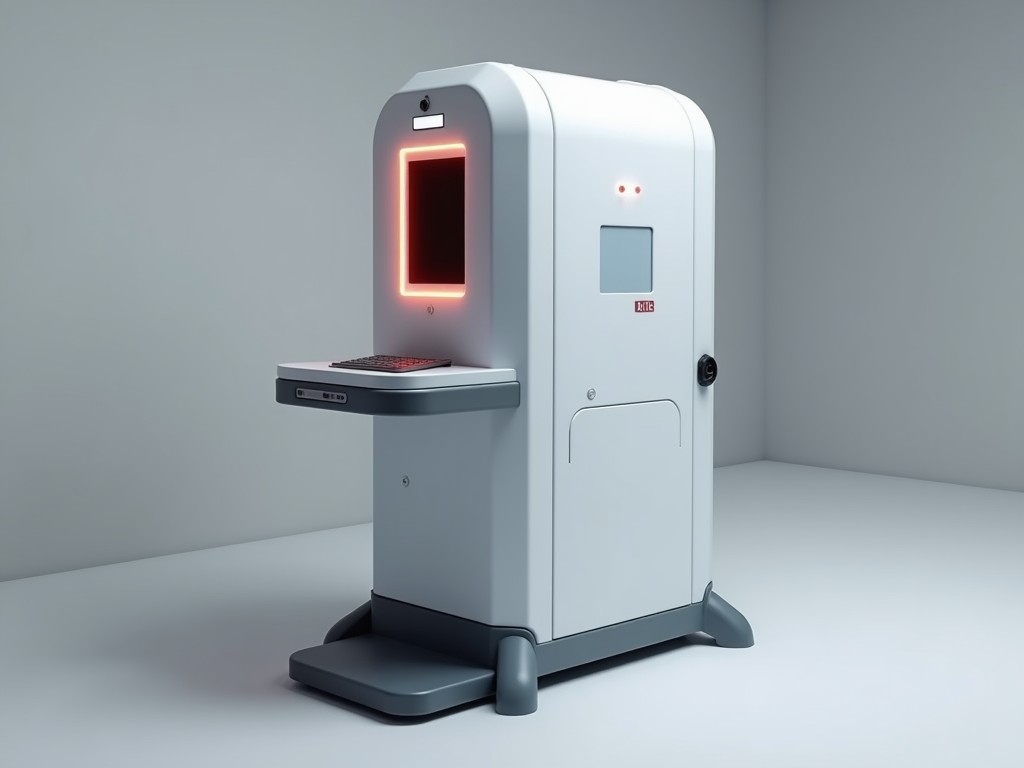
B2B Full Body Scanner Machine Price
A full body scanner for industrial security uses multi‑energy X‑ray or millimeter‑wave technology to detect concealed objects on personnel. Pricing reflects detector resolution, throughput capacity,
Inquire NowB2B Full Body Scanner Machine – Price Overview
A full body scanner for industrial security uses multi‑energy X‑ray or millimeter‑wave technology to detect concealed objects on personnel. Pricing reflects detector resolution, throughput capacity, safety shielding, and integration options.
Key Technical Specifications
Detector resolution determines the smallest detectable item size, typically expressed in millimetres of metal equivalency.
Scan speed is expressed in persons per hour and depends on conveyor belt velocity and image processing time.
- Metal detection sensitivity: 0.5 mm steel sphere equivalent.
- Penetration energy: selectable between 80 kV and 140 kV for X‑ray units.
- Throughput capacity: 300 to 900 persons per hour depending on model.
- Power consumption: 1.5 kW to 3.5 kW during operation.
- Footprint: width 1.2 m, depth 0.8 m, height 2.2 m (adjustable).
Factors Influencing Price
Material cost of high‑density tungsten shielding contributes significantly to the base price due to its density and machining complexity.
Throughput requirements drive the choice of detector array size and cooling system capacity, which affect both hardware and installation expenses.
Integration with existing access control systems adds engineering effort and influences total project cost through custom software interfaces.
Typical Configuration Options
Manufacturers often offer three standard configurations that balance performance and budget.
| Model | Detector Type | Throughput (persons/hr) | Shielding Thickness (mm) | Approx. Price Range (USD) |
|---|---|---|---|---|
| Entry‑Level | Single‑energy X‑ray, 80 kV | 300 | 10 | $45,000 – $55,000 |
| Mid‑Range | Dual‑energy X‑ray, 80/140 kV | 600 | 15 | $70,000 – $85,000 |
| High‑Throughput | Multi‑detector array, 140 kV | 900 | 20 | $110,000 – $130,000 |
Exact pricing depends on optional features such as automated threat‑alert software, remote diagnostics, or customized conveyor integration.
Applications in Industry
In high‑volume logistics centers, the scanner screens employees entering secure zones without causing operational bottlenecks.
Correctional facilities use the technology to prevent contraband entry while maintaining a non‑invasive inspection process.
Manufacturing plants that handle sensitive materials deploy full body scanners to verify that personnel are not carrying unauthorized metal objects or electronic devices.
Quality Assurance and Calibration
Calibration follows ISO/IEC 17025 guidelines using traceable radiation sources to verify detector gain and energy resolution.
Routine quality checks include uniformity testing across the scan field and verification of shielding integrity with portable dosimeters.
Software firmware updates are version‑controlled and documented to ensure consistent threat‑detection algorithms over the equipment lifespan.
Frequently Asked Questions
- Can the scanner dimensions be customized for specific doorway heights?
Yes, the gantry width and height can be adjusted in 50 mm increments to match facility constraints.
- What information is required before a quotation is issued?
Required details include expected throughput, facility ceiling height, power availability, and any desired software modules.
- How is machine calibration verified after installation?
Verification involves a dual‑source check, uniformity map, and shielding leakage test performed by a certified technician.