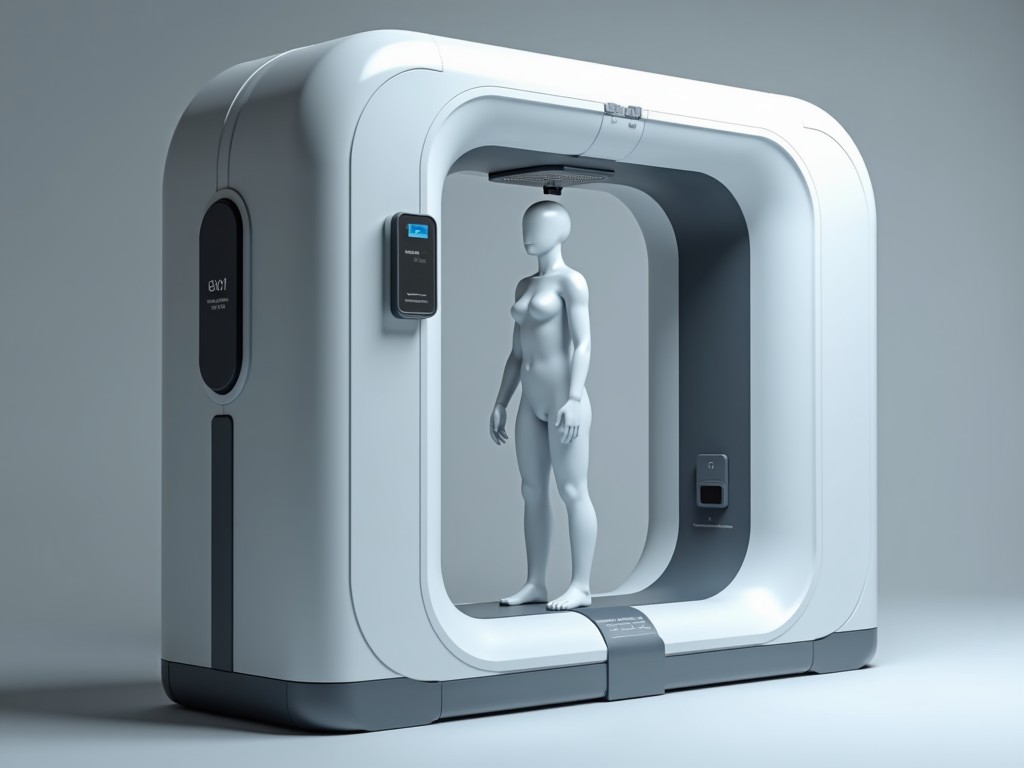
3D Full Body Scanner Price
This page explains the technical characteristics that affect the cost of a three‑dimensional full‑body scanning system and helps buyers evaluate what price range matches their measurement
Inquire Now3D Full Body Scanner Price Overview
This page explains the technical characteristics that affect the cost of a three‑dimensional full‑body scanning system and helps buyers evaluate what price range matches their measurement requirements.
Technology and Measurement Principles
A full‑body scanner typically uses structured light or laser triangulation to capture surface geometry. The system projects a known pattern onto the subject and records deformation with multiple synchronized cameras.
Resolution is defined by the smallest discernible feature, often expressed in millimeters, while acquisition speed is measured in frames per second or total scan time for a full pose.
Key Technical Specifications
Below are typical values that influence pricing; actual figures depend on the chosen configuration and optional modules.
| Parameter | Typical Range | Impact on Cost |
|---|---|---|
| Scanning resolution (point spacing) | 0.2 mm – 1.0 mm | Finer resolution requires higher‑grade optics and more cameras, raising price. |
| Measurement volume (W × H × D) | 1.5 m × 2.0 m × 0.8 m up to 3.0 m × 3.0 m × 1.5 m | Larger volumes need wider baseline and stronger illumination, increasing cost. |
| Frame rate / capture speed | 5 fps – 30 fps (full‑body) | Higher frame rates demand faster sensors and processing hardware. |
| Portability (weight, power) | Fixed‑floor units 150 kg – 300 kg, 110 V/220 V AC; portable options <50 kg, battery‑operated | Portable designs add rugged housing and battery systems, affecting price. |
Typical Applications in Industry
Automotive manufacturers use full‑body scans to assess ergonomics of vehicle interiors, ensuring that controls are reachable for a diverse driver population.
Apparel and protective gear companies employ the data to create accurate avatars for virtual fitting, reducing the need for physical prototypes.
In healthcare, scanners support the design of custom orthotics and prosthetics by capturing precise body contours.
Each application benefits from a scanner that delivers sub‑millimeter detail over the required volume while maintaining repeatability under controlled lighting.
Factors Influencing Price
- Optical hardware: number of cameras, lens quality, and laser power directly affect material cost.
- Processing unit: GPU/CPU capability for real‑time point‑cloud generation adds to the bill of materials.
- Enclosure and environmental protection: IP‑rated housings for industrial settings increase cost.
- Software suite: licensing for advanced post‑processing, mesh cleanup, and CAD integration varies.
- Calibration accessories: reference artifacts and automated calibration stations add optional expense.
Customization and Integration Options
Buyers can select a baseline configuration and then add modules such as a rotating platform for automated pose capture, or a handheld scanner attachment for hard‑to‑reach areas.
Software can be tailored to output specific file formats (OBJ, STL, PLY) or to feed directly into ERP systems for size‑chart generation.
Integration with robotic arms is possible for inline inspection, requiring synchronized triggers and safety interlocks.
Quality Assurance and Calibration
Each unit undergoes factory verification against a traceable standard artifact, checking point‑to‑point deviation across the full volume.
Field calibration kits are available, allowing users to confirm accuracy before each measurement session.
Warranty terms typically cover hardware defects for 12 months, with optional extended service plans.
Frequently Asked Questions
Yes, the baseline frame and camera bars can be extended or reduced according to project requirements, which alters the overall cost.
Q: What information is needed for a quotation?Required details include desired resolution, maximum body dimensions to be scanned, expected throughput (scans per hour), and any environmental constraints such as dust or moisture.
Q: Is software included in the base price?Basic capture and mesh generation software is included; advanced modules for automatic segmentation or CAD integration are offered as optional licenses.
Q: How is the scanner shipped and protected?Units are packed in shock‑absorbent crates with internal foam padding; optional climate‑controlled packaging is available for long‑distance transport.
Q: What is the typical lead time?Standard configurations ship within 6‑8 weeks after order confirmation; customized builds may require 10‑12 weeks.
To obtain a detailed quote that matches your specific scanning needs, please provide the technical parameters outlined above.
Request a Quote