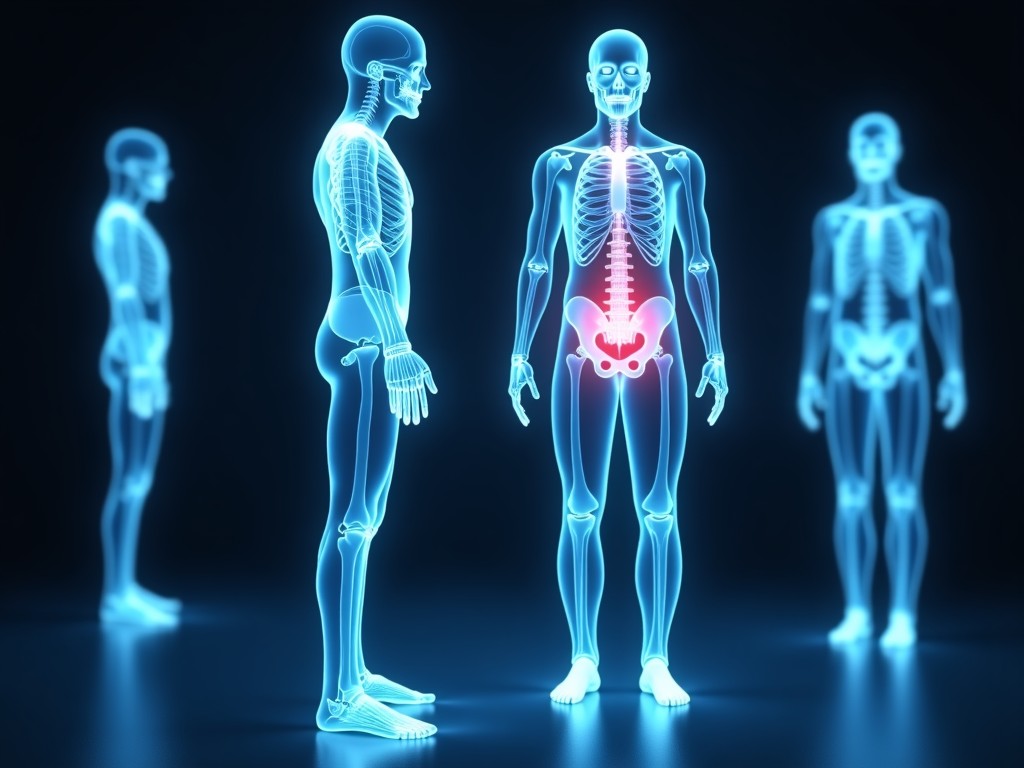
3D Body Scanning Software Technology
Three-dimensional body scanning software processes raw sensor data to generate accurate surface meshes of the human form. It operates as a post‑processing layer that aligns, filters, and merges point
Inquire Now3D Body Scanning Software Technology
Overview
Three-dimensional body scanning software processes raw sensor data to generate accurate surface meshes of the human form. It operates as a post‑processing layer that aligns, filters, and merges point clouds from various acquisition devices such as structured light scanners, laser triangulation systems, or multi‑camera photogrammetry rigs.
Core Technology
The software employs a registration algorithm based on iterative closest point (ICP) refinement combined with multi‑scale surface fitting. It compensates for sensor noise, motion blur, and varying reflectivity by applying adaptive weighting and outlier rejection before mesh generation.
Measurement Accuracy and Resolution
Accuracy depends on the input sensor specifications and the chosen processing parameters. Typical values for a well‑calibrated structured light system paired with the software are:
- Spatial resolution: 0.5 mm to 2 mm point spacing
- Surface deviation: ±0.8 mm RMS over a 180 cm height range
- Repeatability: <0.3 mm standard deviation after five consecutive scans
These figures are indicative; actual performance varies with lighting conditions, subject movement, and calibration fidelity.
Data Processing Pipeline
Raw sensor frames first undergo depth map extraction or stereo disparity calculation, depending on the front‑end hardware. The pipeline then applies:
- Temporal filtering to reduce frame‑to‑frame jitter
- Global registration using feature‑based alignment followed by ICP refinement
- Hole filling via Poisson surface reconstruction with adaptive weighting
- Texture mapping and UV unwrapping for color‑enabled outputs
Each stage can be toggled or parameterized to balance processing speed against geometric fidelity.
Integration Interfaces
The software provides a C++ API and a RESTful service endpoint for real‑time or batch processing. Data exchange formats include PLY, OBJ, STL, and GLTF, with optional metadata packs for scan timestamp, sensor intrinsics, and processing logs. Supported operating systems are Windows 10/11 (64‑bit) and selected Linux distributions (Ubuntu 20.04 LTS, CentOS 8).
Industrial Applications
In apparel manufacturing, the software enables rapid creation of parametric avatars for virtual fitting, reducing physical prototype cycles by up to 40 %. In automotive ergonomics, it supplies precise seat‑and‑control reach data for virtual occupant modeling, supporting compliance with safety standards such as FMVSS 208. For healthcare, it assists in producing custom orthotics and prosthetic sockets by delivering sub‑millimeter surface captures of limbs under load‑bearing conditions.
Comparison of Scanning Approaches
The following table contrasts typical characteristics of common acquisition methods when paired with the scanning software. Values are representative and can shift with specific hardware configurations.
| Method | Typical Point Spacing | Capture Speed (full body) | Subject Pose Freedom | Typical Cost Indicator |
|---|---|---|---|---|
| Structured Light | 0.5 mm – 1.5 mm | <1 second | Limited to near‑static poses | Medium |
| Laser Triangulation | 0.2 mm – 0.8 mm | 2–5 seconds | Moderate (requires scanner movement) | High |
| Multi‑Camera Photogrammetry | 1.0 mm – 3.0 mm | 0.5–2 seconds (flash) | High (natural movement tolerated) | Low‑Medium |
| Time‑of‑Flight (TOF) | 2.0 mm – 5.0 mm | <0.5 second | High | Medium‑High |
Implementation Considerations
Deployment requires verification of sensor‑to‑software timing synchronization, especially for dynamic captures. Calibration targets with known geometry (e.g., checkerboards or retro‑reflective spheres) are used to compute intrinsic and extrinsic parameters before scanning. The software supports multi‑GPU acceleration; a single NVIDIA RTX 3060 or equivalent can process a 2 million‑point cloud in under 0.8 second on average.
Customization options include selection of mesh decimation levels, texture resolution (up to 8 K), and output coordinate system alignment (e.g., aligning to a biomechanical joint center). Licensing models are available as perpetual node‑locked licenses or annual subscription with maintenance.
Quality Assurance and Validation
Validation follows a traceable procedure: a calibrated reference artifact (e.g., a steel gauge block set) is scanned, and the software‑generated mesh is compared to the CAD model using cloud‑to‑cloud distance analysis. Acceptance criteria are set at a mean absolute error below 0.6 mm and 95 % of points within 1.2 mm tolerance. Documentation of calibration records, processing logs, and deviation reports is generated automatically for each batch.
Periodic audits of sensor firmware and software version control ensure repeatability across production lines. The system does not claim certifications; compliance with industry‑specific standards (e.g., ISO 10360‑8 for optical 3D scanners) is the responsibility of the integrator.
Frequently Asked Questions
Can the software handle multiple sensors simultaneously?
Yes. The API accepts synchronized frame streams from up to four sensors, performing intrinsic‑extrinsic calibration and merging them into a unified point cloud before registration.
What file formats are supported for importing raw data?
Import formats include RAW bitmap pairs for structured light, XYZ ASCII point clouds, PLY, and proprietary binary streams from specific scanner SDKs. Custom parsers can be added via the plug‑in interface.
Is real‑time feedback available for operator guidance?
A lightweight preview mode delivers a downsampled point cloud at 15 fps, allowing the operator to adjust pose or lighting before initiating a high‑resolution capture.
Next Steps
For technical evaluation, please provide details of your existing scanning hardware, required throughput, and any specific output format constraints. Our application engineers will respond with a feasibility assessment, recommended configuration, and quotation.
Request Technical Consultation