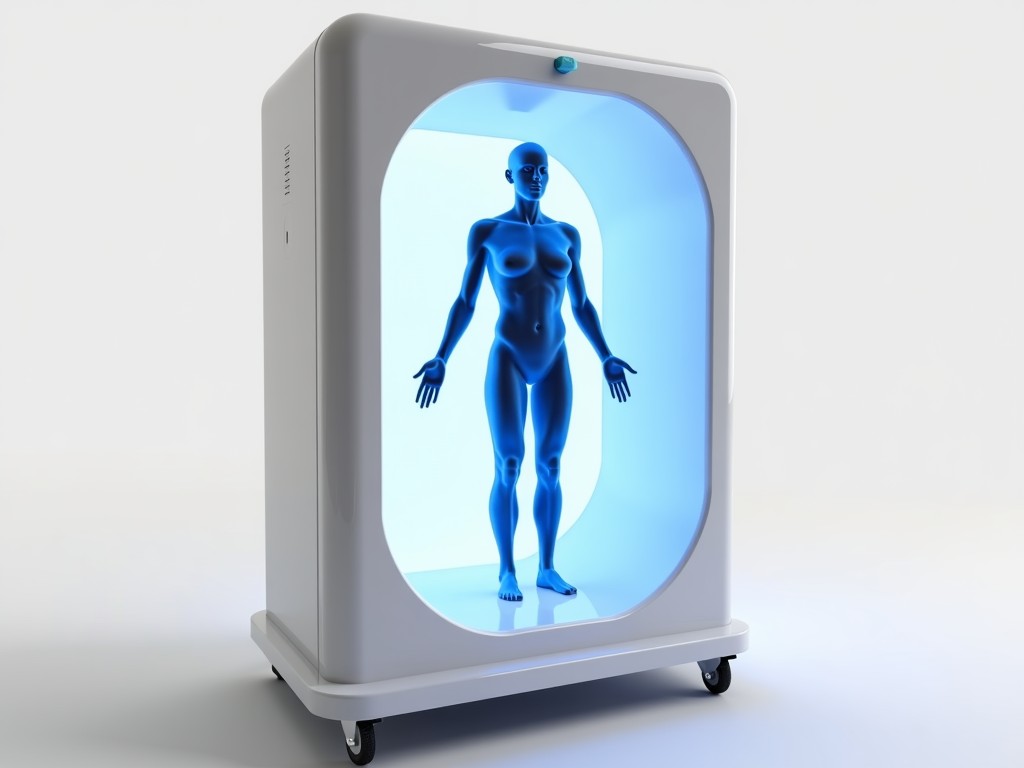
3D Body Scanner Machine Manufacturer
A 3D body scanner captures the three-dimensional shape of a person using optical sensing techniques. The resulting point cloud or mesh provides precise dimensional data that replaces manual tape
Inquire Now3D Body Scanner Machine – Manufacturer Overview
A 3D body scanner captures the three-dimensional shape of a person using optical sensing techniques. The resulting point cloud or mesh provides precise dimensional data that replaces manual tape measurements in industries such as apparel, automotive interior design, and medical prosthetics.
Scanning Technology Principles
Most industrial scanners employ structured light projection, where a known pattern is cast onto the subject and deformations are captured by one or more cameras. Alternatives include laser triangulation, which measures distance by detecting the angle of a reflected laser line, and multi‑view photogrammetry that reconstructs shape from overlapping images.
Typical resolution for body‑scanning systems ranges from 0.3 mm to 0.8 mm, allowing detection of subtle surface variations such as garment seams or muscle contours. Acquisition time is usually under 2 seconds per scan, enabling high‑throughput workflows.
Key Technical Parameters
| Parameter | Typical Value | Notes |
|---|---|---|
| Measurement Volume | 2000 mm × 1000 mm × 600 mm | Adjustable via lens choice |
| Spatial Resolution | 0.5 mm (point spacing) | Dependent on pattern density |
| Scan Speed | 1.5 s per full body | Includes data transfer |
| Output Formats | PLY, OBJ, STL, CSV | Selectable in software |
| Power Supply | 100‑240 V AC, 50/60 Hz | Typical power <150 W |
Industrial Applications
In apparel manufacturing, the scanner provides rapid body‑size databases that feed pattern‑making software, reducing the need for physical fit sessions and cutting material waste.
Automotive interior designers use the captured geometry to design seats, steering wheels, and control layouts that accommodate a diverse driver population, improving comfort and safety.
Medical device companies rely on the data to create custom prosthetic sockets and orthotic braces, ensuring a precise interface with the patient’s anatomy.
Virtual‑reality and gaming studios integrate the scans to generate realistic avatars, enhancing user immersion while maintaining accurate body proportions.
Customization and Integration
- Adjustable field‑of‑view optics to accommodate different studio sizes.
- Software development kit (SDK) for real‑time data streaming into CAD or PLM systems.
- Mounting options: tripod, ceiling rail, or portable frame.
- Output can be filtered for specific regions (e.g., torso only) to reduce file size.
Quality Assurance and Calibration
Each scanner undergoes factory calibration against a traceable reference artifact, verifying point‑to‑point accuracy within ±0.2 mm over the full measurement volume. Periodic field checks using a calibrated calibration plate ensure long‑term stability, and software provides automated reports for audit trails.
Material selection for the housing focuses on low‑thermal‑expansion alloys and carbon‑fiber composites to minimize dimensional drift caused by temperature fluctuations in production environments.
Next Steps
Engineers and procurement managers can request a technical datasheet, sample scan data, or a virtual demonstration to evaluate suitability for their specific workflow.
Contact our technical team to discuss configuration options, lead times, and integration support.